


The Princeton Bucket List: 6 Iconic Landmarks You Cannot Miss

Princeton, New Jersey, packs more history, architecture, and cultural gravity into a few square miles than most cities scatter over entire boroughs. A Revolutionary War battlefield, the home of Albert Einstein, and one of the most prestigious university campuses in the world all sit within walking distance of an excellent ice cream shop.
This is a place that rewards curiosity, and the six stops below represent the core of what makes it count.
1. Princeton University Campus
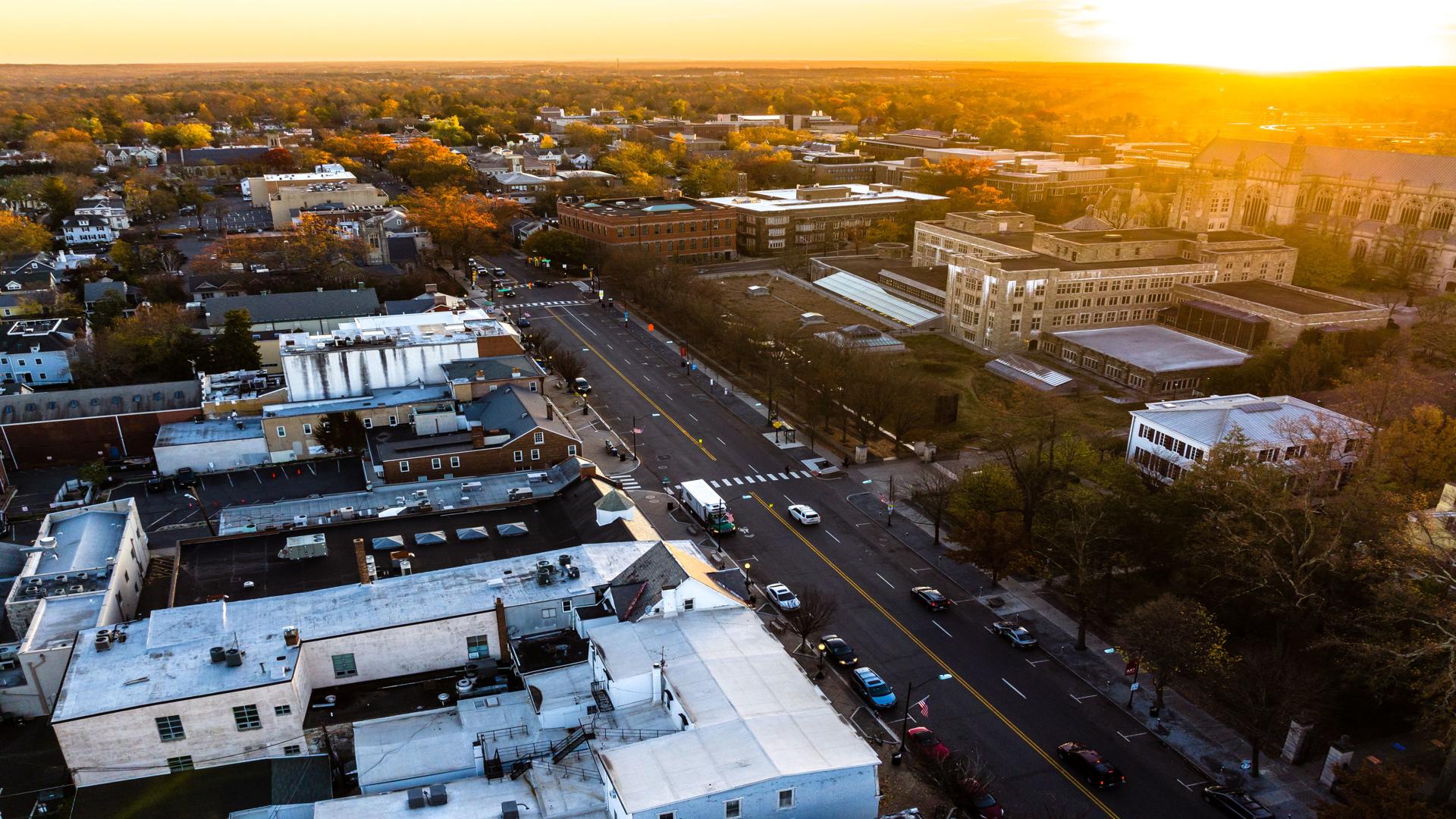
The campus anchors everything else in town, and even visitors with no connection to academia tend to stop mid-step when they first see it. Parking near the campus is limited, and arriving directly at Nassau Street beats circling the blocks. Nassau Hall, completed in 1756, is the oldest building on campus and briefly served as the United States Capitol in 1783 while the Continental Congress met there. The University Chapel, completed in 1928, ranks among the largest university chapels in the country and stands as one of the finest examples of Gothic architecture in New Jersey.
- The move: Enter through the FitzRandolph Gate on Nassau Street. It frames Nassau Hall over the main lawn in a way that any other entrance simply doesn’t, and it gives you one of the best first views of any university campus in the Northeast.
- Campus lore to know: Princeton students don’t walk out through the center gate of FitzRandolph until graduation day. The superstition holds that leaving through the middle gate ahead of graduation cuts short the academic career. Watch for students conspicuously veering to the sides.
2. Princeton University Art Museum
One of the most significant museum openings in recent memory happened here on October 31, 2025, when Princeton’s Art Museum reopened after a five-year expansion from Adjaye Associates. The result is 146,000 square feet and 32 galleries, roughly double the exhibition space of Paris’ Picasso Museum, housing more than 117,000 works spanning 5,000 years of global art history. TIME named it one of the World’s Greatest Places in 2026. Works range from ancient Egyptian art to Andy Warhol and contemporary commissions.
Admission is free, but the museum is closed on Mondays, so check current hours before visiting.
- What most visitors don’t know: The ground floor features interior pedestrian paths called Artwalks, open even when the galleries themselves are closed. Walk directly over ancient Roman floor mosaics recessed into the floor, no ticket required.
3. Palmer Square
Directly across Nassau Street from the university gates, Palmer Square is the town’s commercial and social center. The block of Colonial-revival brick and stucco buildings was developed in the 1930s and holds the best concentration of boutiques, restaurants, and coffee shops in Princeton.
This is the logistical anchor of a day in town. It’s where most people eat, where the Nassau Inn has stood since the colonial era, and where Thomas Sweet Ice Cream has made a compelling argument for staying longer than planned.
- Parking note: Parking on Nassau Street is limited and competitive on weekends. The Hulfish Street Garage and the Chambers Street Garage are both within easy walking distance. Anyone covering multiple stops across town in a single day might find it simpler to skip the garages entirely.
4. Morven Museum & Garden
A short walk down Stockton Street from Palmer Square, Morven was constructed by Richard Stockton, a signer of the Declaration of Independence. The mansion served as the official New Jersey Governor’s Residence for nearly four decades, from 1944 to 1981, and the property now operates as a museum covering more than 300 years of state and national history.
The house is worth the visit year-round. The gardens surrounding it, however, are something else entirely in spring and fall, meticulously maintained and at their best when the blooms are out, or the foliage turns. Those seasons are when Morven earns its strongest case for the itinerary, and they also happen to be when visitors landing at EWR and heading out to Princeton for the day get the best of both.
5. Princeton Battlefield State Park and the Clarke House
On January 3, 1777, George Washington led Continental Army troops to a victory at Princeton that changed the momentum of the Revolutionary War. The Battle of Princeton came days after the crossing of the Delaware River and the attack on Trenton, and the three victories together kept the American cause alive across a brutal winter.
The battlefield is preserved as a state park. Walking the grounds gives a sense of the terrain and scale that no description quite captures.
- Don’t skip the Clarke House! The farmhouse on the property served as a field hospital during and after the battle. It’s preserved and open to visitors, and it puts a human face on the military history that the open fields alone cannot. This is where soldiers were brought in after the fighting stopped, and it remains one of the most quietly affecting historic sites in New Jersey.
6. The Albert Einstein House, 112 Mercer Street
Albert Einstein moved to Princeton in 1935 and lived at 112 Mercer Street until his death in 1955. During those two decades, he worked at the nearby Institute for Advanced Study and became part of the fabric of the town, reportedly taking long walks around the neighborhood, stopping to talk with children who recognized him from his photo.
The house is a private residence and not open to the public. The visit is a walk-by and a photograph from the sidewalk. That’s the whole thing, and it’s enough.
What makes it worth the stop isn’t access to the interior; it’s standing in front of a white clapboard house on a still street and understanding that one of the most consequential minds of the twentieth century chose this as his home. The Institute for Advanced Study, where Einstein worked, is about a mile away and has its own grounds worth seeing.
Easier to Reach Than You’d Think
Princeton sits about an hour by train from New York Penn Station via NJ Transit rail at Princeton Junction, and roughly an hour from Philadelphia. Newark is the most convenient airport for the trip, and the drive from EWR to Princeton takes about 45 minutes under normal conditions.
The town is compact enough that once you’re there, the six stops above are largely walkable, with the battlefield being the one exception that benefits from a vehicle.
Why Princeton Stays with You
Six landmarks, a few square miles, and enough history to fill a week. Princeton rewards the kind of visitor who slows down rather than checks boxes, and the stops above give a real structure to the day.
Most of what makes the town worth the trip is visible from the sidewalk, free to enter, or a short walk between stops. The ice cream at the end is optional but strongly recommended.
Categories
- New York Limousine Service (61)
- Long Island Limo Service (31)
- Things To Do In Long Island (15)
- Airport Limo Car Service (13)
- Travel Tips (12)
- Bronx Limo Service (8)
- Concert Transportation (8)
- Hampton Car Service New York (7)
- Corporate Transportation (6)
- Holidays (6)
- JFK Airport Transportation (5)
- New York Airport Transportation (4)
- Business Travel (3)
- Business Meetings (3)
- JFK Limo Service (2)
- Things To Do In Southampton (2)
- LGA Airport (1)