


New York Fashion Week: February, September, and What the Industry Doesn’t Tell You

New York Fashion Week runs twice a year, and the calendar confuses most people the first time they read it. New York sits under winter coats in February, yet the collections on the runway belong to the following fall. In September, the city is still warm, and designers are already showing next year’s spring lineup.
Two Seasons, Two Weeks: Here’s the Logic
The fashion industry buys ahead of the season it sells. Retailers and editors need months to produce and stock what eventually reaches the sales floor. That gap is why NYFW presents fall and winter looks in February and spring and summer looks in September. The name refers to the clothing on the runway, not the weather outside the venue. Once that clicks, both February and September make complete sense.
Six days twice a year, and the whole industry builds around them:
- Fall/Winter 2026: February 11 to 16, 2026
- Spring/Summer 2027: September 10 to 15, 2026
February Means Fall/Winter
February is the cold-weather edition, where coats, knitwear, leather, and richer palettes define the runway. The 2026 run covered February 11 to 16, with Ralph Lauren opening a day early on the 10th among 60-plus shows.
A few names anchor the February week across nearly every cycle. Rachel Scott opened the 2026 run with her Proenza Schouler debut. Michael Kors typically draws one of the season’s most prominent front rows, alongside buyers from major retailers.
February carries the week’s oldest history. Publicist Eleanor Lambert launched the first Press Week in 1943, pulling editorial attention away from Paris during the war. Early shows were held in hotel suites at the Pierre and the Plaza, then moved to outdoor tents from 1994 through 2009. In 2014, Dr. Danielle Sheypuk became the first model to use a wheelchair on a fashion week runway. A year later, Jamie Brewer became the first woman with Down syndrome to walk one.
September Means Spring/Summer
September presents the warm-weather collections, with lighter fabrics, resort references, and brighter palettes suited to the season ahead. The 2026 edition runs September 10 to 15, with Ralph Lauren and several labels opening early on the 9th among 70-plus shows.
Diane von Furstenberg opens the September program on the 10th, with Henry Zankov making his debut as the house’s artistic director. Thom Browne closes the week on the 15th, the week between them drawing both American and international names across every market level.
September carries some of the heaviest history in the event’s record. In 2001, the September 11 attacks struck the city while shows were underway at Bryant Park, ending what remained of the week. The industry’s efforts to support emerging American designers in the aftermath eventually contributed to the CFDA/Vogue Fashion Fund, launched in 2003. For the 2026 edition specifically, the CFDA noted that September 11 falls on the first Friday of the week. Out of respect for the 25th anniversary of the attacks, the day’s shows begin at 10 a.m. Venues shifted too, from Lincoln Center between 2010 and 2015 to the dispersed format around Spring Studios today.
The Whole City Is the Venue
Most first-time visitors picture one building, but New York Fashion Week has no central address. Shows land wherever designers choose, from a Tribeca gallery to a hotel ballroom in Midtown to a converted warehouse in Brooklyn. Chelsea parking structures and SoHo showrooms have both served as runway spaces in recent seasons.
Some venues appear on the CFDA calendar weeks in advance. Others surface only in the invitation, the address confirmed just days out. A single day can pull attendees across the Meatpacking District, Lower Manhattan, and back again, depending on who is showing and where.
Formats, Slots, and Who’s Showing
Standard CFDA time slots run six windows across the day, from morning through late evening. The midday slots are historically the most contested, with each runway show running 12 to 25 minutes. Theoretically, 30 to 45 minutes separate consecutive shows, though in practice that gap is almost always less.
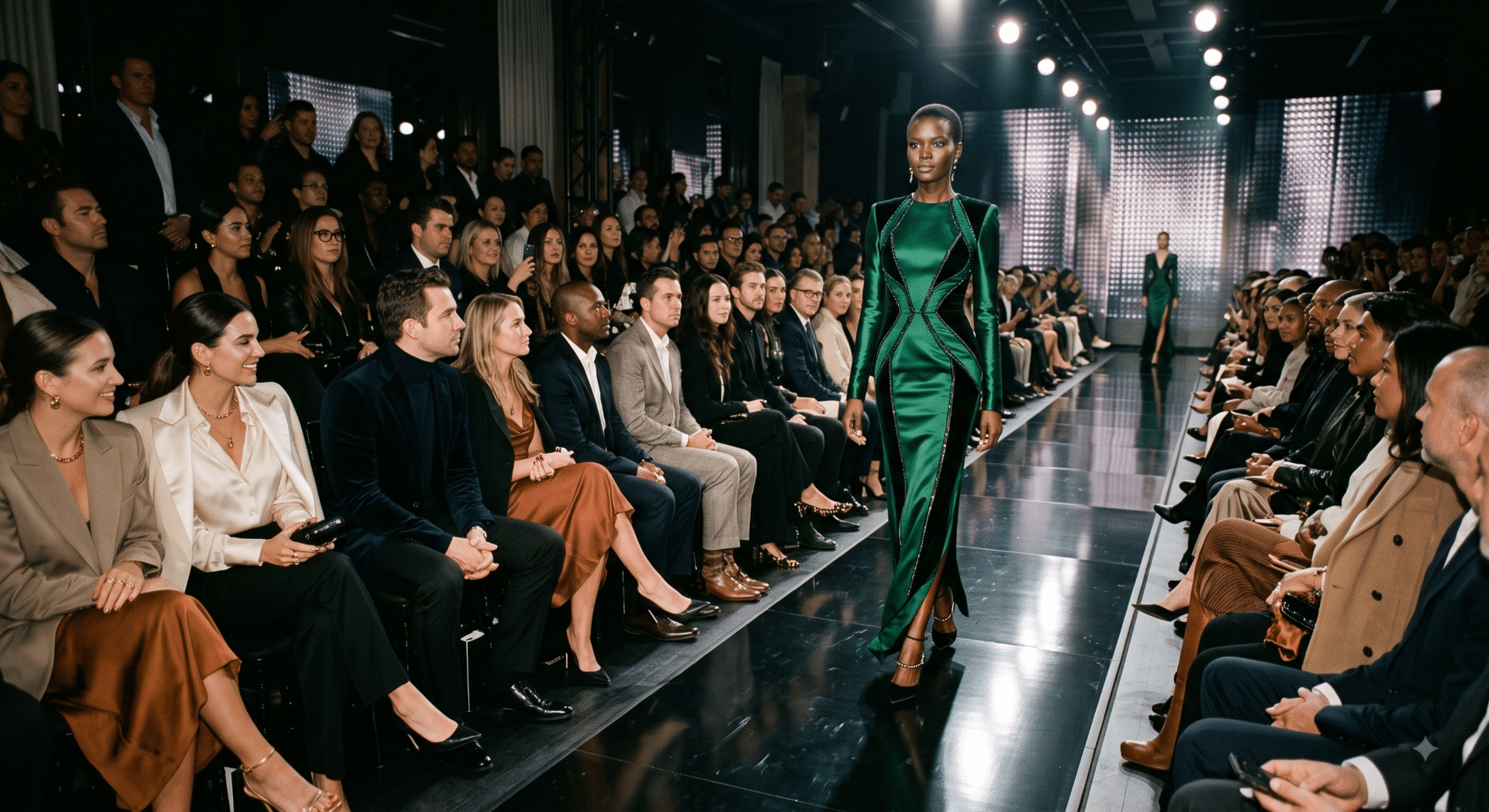
Not every format works the same way. Runway shows have defined start times and strict seating tiers, with front rows reserved for press and celebrities. Presentations run as open windows of two to three hours, allowing rolling entry. Showroom appointments follow tighter rotations and are typically concentrated at the start of the week.
The September 2026 lineup mixes returning houses with names appearing on the official CFDA listing for the first time. CFDA/Vogue Fashion Fund finalists Bad Binch TongTong, Jamie Haller, and Milamore make that listing this cycle. They join Calvin Klein, Anna Sui, and Tommy Hilfiger in the week’s roster. Coach, Tory Burch, and Proenza Schouler draw the contested midweek slots. Most industry attendees map their days by neighborhood, grouping nearby shows rather than crossing town repeatedly.
Who Can Actually Attend
Most official designer shows are invitation-only, with access controlled by brand publicists and the CFDA credentialing process. That covers the majority of what appears on the CFDA roster.
Publicly ticketed programming does exist, though. The Bureau’s official NYFW shows at Gotham Hall run September 11 through 13, 2026, with no industry credentials required. General admission tickets start around $125. Beyond that, brand activations, pop-ups, and independent screenings run throughout both weeks. Not everything marketed as NYFW makes that list. The distinction matters. Credentialed events follow different access rules than events that simply fall during the same two weeks.
The Rule That Changed in 2026
Starting September 2026, farmed or trapped fur no longer qualifies for the NYFW calendar. The CFDA announced the ban in December 2025, and by then, several fashion weeks had already moved in that direction. London went first in 2018, followed by Copenhagen, Berlin, Stockholm, and Amsterdam. Condé Nast pulled fur from its publications and advertising in October 2025. The CFDA followed two months later. That narrowed the promotional window considerably for anyone still working with the material.
The specific restricted materials are mink, fox, rabbit, karakul lamb, chinchilla, coyote, and raccoon dog. That last one trips people up. The ban extends beyond runway collections to everything the CFDA promotes. Social media, website content, and all listings fall under it, so the restriction lands at every level of visibility. One exemption stands. Fur from traditional Indigenous subsistence practices remains permitted. The CFDA is building out a material library and educational resources for designers making the switch.
What Happens Between the Shows
Between shows, the work is mostly tactical. Attendees confirm the next address, check whether a presentation is still running, and weigh whether the next slot is worth a crosstown push. Venue addresses sometimes arrive only 48 hours out, reshaping the rest of the day for anyone who blocked time assuming otherwise.
Nobody tells you that NYFW is mostly a transportation puzzle with runway shows attached. Two shows can sit an hour apart on paper and still be unrealistic back-to-back when one is downtown and the other across town. The people who move efficiently through both weeks group by neighborhood first, not by time slot. Security lines, late starts, and traffic cut into every gap. For anyone running multiple stops across Manhattan in a single day, that math adds up faster than it looks.
Categories
- New York Limousine Service (61)
- Long Island Limo Service (31)
- Things To Do In Long Island (15)
- Airport Limo Car Service (13)
- Travel Tips (12)
- Bronx Limo Service (8)
- Concert Transportation (8)
- Hampton Car Service New York (7)
- Corporate Transportation (6)
- Holidays (6)
- JFK Airport Transportation (5)
- New York Airport Transportation (4)
- Business Travel (3)
- Business Meetings (3)
- JFK Limo Service (2)
- Things To Do In Southampton (2)
- LGA Airport (1)